Global Bathroom Market Poised to Surpass $150 Billion: Health, Intelligence, and Sustainability Drive Industry Transformation
Nov 23, 2025 – The global bathroom fixtures market is on track to reach a record $150.6 billion in 2025, marking a 49% surge from 2018, according to the "2025 China Bathroom Industry Development White Paper". This robust growth signals a profound restructuring of the sector, shifting from price competition to value-driven rivalry, with health, intelligence, and sustainability emerging as the core competitive pillars.
Market Restructuring: From Single-Pole to Multi-Polar Growth
A notable shift in the global market landscape is the contraction of China's market share, which dropped from 41% in 2021 to 28% in 2024. This transition has paved the way for a multi-polar growth model:
Mature markets in North America and Europe are fueled by renovation demand for existing housing, with consumers prioritizing quality and functional upgrades.
Emerging markets, including India, Southeast Asia, and Central Asia, are witnessing booming demand driven by infrastructure development and urbanization.
Regional markets exhibit distinct characteristics: Europe (27% market share) emphasizes design aesthetics and environmental standards; North America (23%) focuses on practicality and DIY culture; Asia excluding China (14%) shows a dual trend of high smart toilet penetration in Japan/South Korea and strong basic product demand in India/Vietnam.
Three Core Trends Reshaping the Industry
Health-Centric Innovation: Bathroom spaces are evolving from mere cleaning areas to health management hubs. Brands like ARROW Home have launched accessible elderly-care bathroom suites, while smart toilets with urine testing functions enable non-invasive health monitoring, providing real-time data on health indicators within minutes.
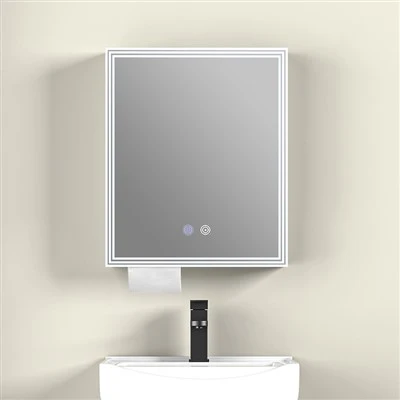
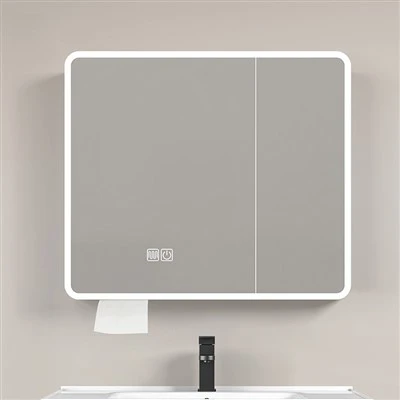
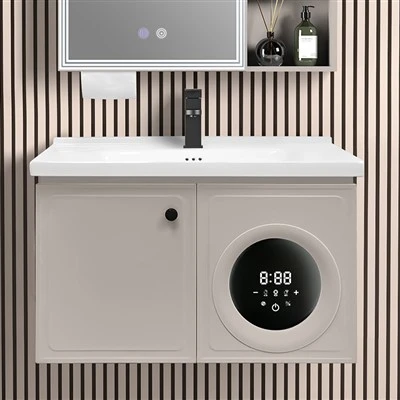
Smart Space Integration: Intelligent bathroom products are advancing from single-device control to whole-house connectivity. Collaborations such as JOMOO and Huawei's smart mirror cabinet, equipped with 15.6-inch smart screens and seamless whole-house system integration, exemplify the shift toward proactive, interconnected health terminals.
Sustainability as a Prerequisite: Green, water-saving, and low-carbon features have become mandatory market access criteria. Leading enterprises like Hengjie have adopted comprehensive low-carbon solutions, from water-saving ceramic technologies to integrated bathroom systems, meeting national "dual carbon" goals and setting industry benchmarks.
China's Export Transformation: Quality Over Quantity
China's bathroom product exports are projected to reach 74.5 billion yuan in 2025, entering a phase of quality-driven growth. Key developments include:
Own-brand exports accounting for 24% of total exports, marking a critical shift from OEM/ODM to brand-driven expansion.
Product structure dominated by hardware (42%) and ceramics (36%), with smart toilets (7%) emerging as a strategic growth segment despite their small share.
Core advantages in industrial clustering, cost control, and customization capabilities, alongside ongoing efforts to enhance brand influence and core technologies to compete with international giants.
"The $150 billion market is undergoing a fundamental reshuffle," noted industry experts. "Future success will belong to enterprises that redefine industry boundaries through innovation, shifting from product sales to comprehensive solution provision." As the industry transitions toward value-driven competition, both large corporations and SMEs are urged to prioritize technological insight, user-centric design, and ecological construction to seize new opportunities.