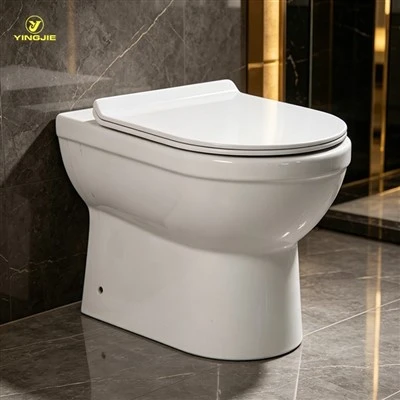
When a procurement manager compares a $45 toilet to a $120 toilet, the visible differences are minimal. Both are white. Both are ceramic. Both flush. The question that drives the purchasing decision is: what exactly are you paying for?
As a sanitary ware manufacturer with 15 years of production experience, this article provides a technical breakdown of the four factors that determine whether a ceramic sanitary ware product will perform for 5 years or 25 years. These are the specifications that matter - and the ones that most catalogs omit.
📦 Quick Specs for Procurement Managers
Product: Yingjie Bath vitreous china toilets & basins · Firing: 1280°C · Water absorption: ≤0.2% · Glaze thickness: ≥1.2mm · Price range: $45–$120/unit · MOQ: 1×20ft container · Lead time: 25–35 days · Certifications: cUPC, Watermark, CE
→ Request QC documentation & factory audit report
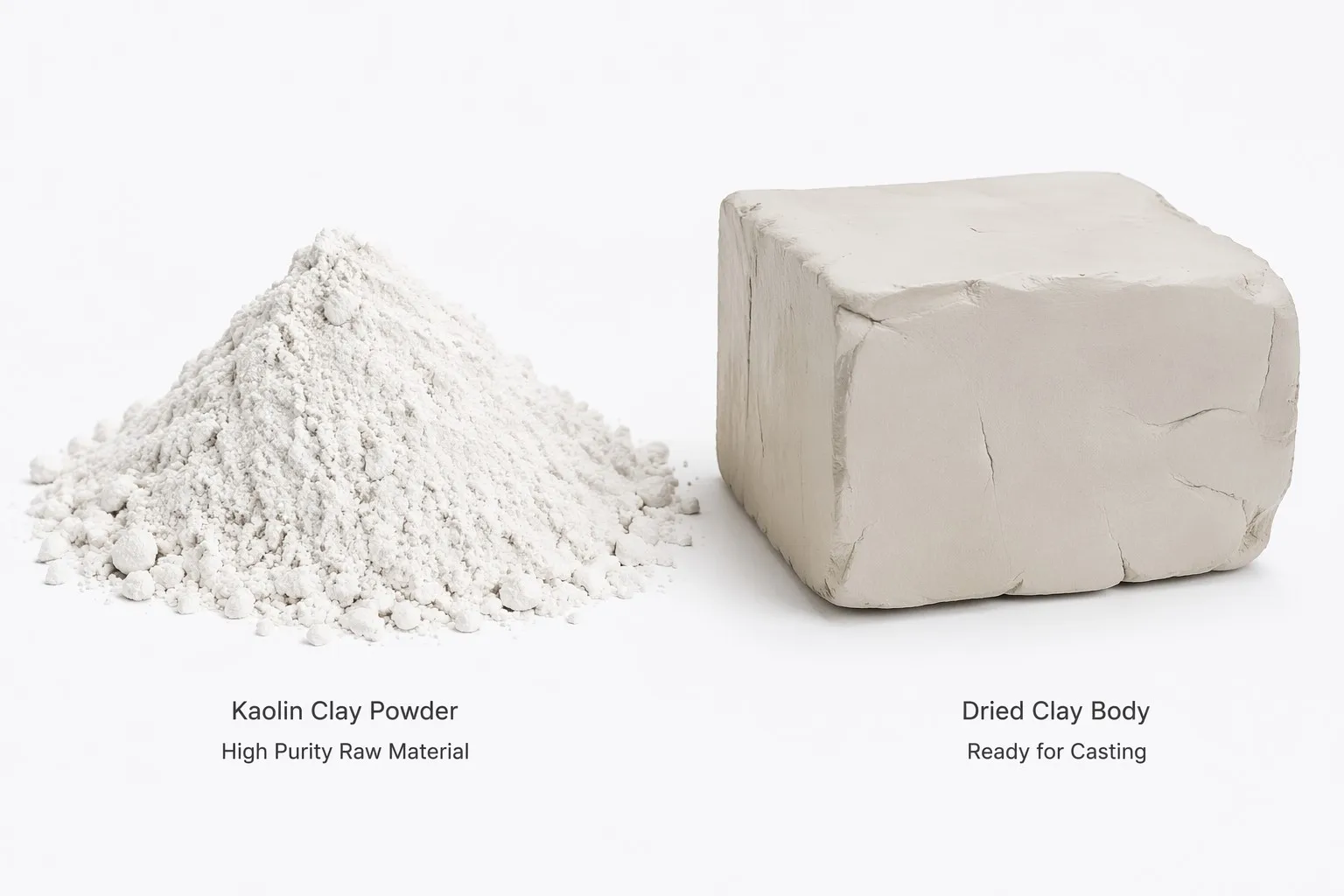
Figure 1: Premium kaolin clay (left) vs. low-grade clay with iron impurities (right)
1. Raw Materials: Kaolin Clay Quality Is the Starting Point
Ceramic quality is determined before the product enters the kiln. It starts with the raw material composition of the slip - the liquid clay mixture poured into plaster molds during casting.
The Kaolin Factor
Kaolin clay is the primary ingredient in vitreous china sanitary ware. Its quality is measured by two properties:
- Plasticity: The clay's ability to hold shape during molding without cracking. High-plasticity kaolin, sourced primarily from deposits in China's Guangdong and Fujian provinces, produces a denser green body with fewer micro-voids after drying.
- Iron Oxide Content: Iron impurities in raw clay cause discoloration during firing - yellow or brown spots that appear beneath the glaze. Premium kaolin contains less than 0.5% iron oxide. Low-cost manufacturers use clay with 1.5–2% iron oxide and compensate with thicker, more opaque glazes that mask defects rather than eliminate them.
Slip Consistency and Casting Control
The slip mixture ratio - approximately 65% kaolin, 25% feldspar, and 10% quartz - determines the fired body's density. Feldspar acts as a flux, lowering the melting point of silica to promote vitrification. Quartz provides structural integrity and thermal shock resistance.
✅ Procurement checkpoint:
Ask the manufacturer for their raw material supplier documentation. A factory that cannot name its kaolin source and iron oxide tolerance is hiding a quality variable.
2. The 1200°C+ High-Temperature Firing Process
If raw material selection is the foundation, kiln firing is the transformation. This is where clay becomes vitreous china - and where the largest quality gap between manufacturers emerges.
Why 1280°C Is the Threshold
Ceramic bodies fired below 1200°C remain semi-vitreous. The silica and feldspar particles have not fully fused, leaving microscopic interconnected pores throughout the body. These pores absorb water, harbor bacteria, and expand during freeze-thaw cycles - causing structural degradation over time.
At 1280°C, the body reaches full vitrification. The water absorption rate drops below 0.2%, meeting the ISO 10545-3 standard for vitreous china. The body becomes glass-like: impermeable, chemically inert, and dimensionally stable.
Tunnel Kiln vs. Shuttle Kiln
The kiln type directly affects product consistency:
- Tunnel kilns: Continuous-feed systems where firing carts move through a controlled temperature gradient - preheat zone (200–600°C), firing zone (1280°C peak), and cooling zone. Every product experiences identical thermal history. Variation between units is negligible.
- Shuttle kilns: Batch-process systems where temperature rises and falls within a sealed chamber. Temperature distribution is less uniform. Products near the burner ports fire hotter than products near the door. Variation between batches can reach 2–3% dimensional difference.
For a high-quality toilet closet, dimensional consistency is critical. A toilet bowl that deviates by 3mm in outlet position will not align with the floor flange during installation. Tunnel kiln firing eliminates this risk.
💡 The Cost of Proper Firing
Reaching and maintaining 1280°C for a 16-hour firing cycle consumes approximately 40% of total manufacturing energy cost. Low-cost manufacturers reduce firing temperature to 1100–1150°C, cutting energy cost by roughly 25%. The resulting product looks identical to the buyer - until it absorbs water, stains permanently, and develops hairline cracks within 2–3 years of installation.
✅ Procurement checkpoint:
Request the manufacturer's kiln temperature logs for a random production batch. A factory running at 1280°C will provide this data. A factory running below specification will not.
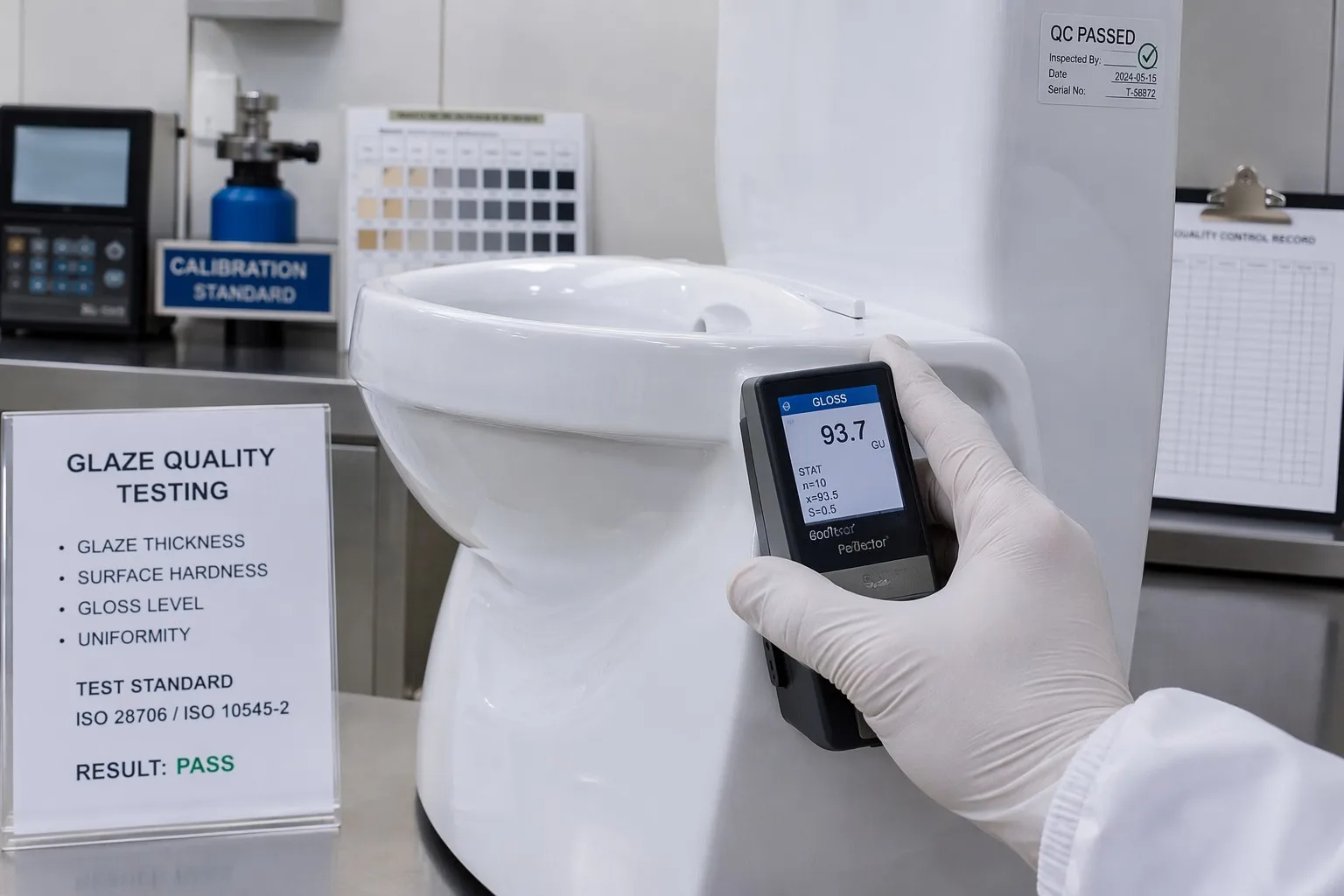
Figure 2: Glaze thickness measurement and Mohs hardness scratch test in QC laboratory
3. Glaze Thickness and Scratch Tests
The glaze is the sanitary ware product's primary defense against chemical attack, physical abrasion, and biological contamination. Its quality is determined by thickness, hardness, and adhesion - all of which can be verified through standardized testing.
Minimum Glaze Thickness: 1.2mm
Applied at the bisque stage - after the first firing but before the glaze firing - the glaze layer must achieve a minimum uniform thickness of 1.2mm across all visible surfaces. Sub-1.0mm glaze thickness is the most common cost-cutting measure in sanitary ware manufacturing, and it is the leading cause of premature product failure.
Why 1.2mm? Commercial cleaning protocols use acidic descalers (pH 2–3) that etch ceramic surfaces over time. A 1.2mm glaze provides approximately 10–15 years of chemical resistance under daily commercial cleaning. A 0.8mm glaze fails in 3–5 years.
Mohs Hardness and Scratch Resistance
The fired glaze surface should achieve a minimum hardness of 6 on the Mohs scale - harder than stainless steel (4–5) and resistant to scratching from metal cleaning tools, abrasive pads, and incidental contact with keys or belt buckles in public restroom environments.
🔬 Standard Scratch Test Procedure
- Apply a controlled load (5N) with a tungsten carbide stylus.
- Draw the stylus across the glaze surface at a constant speed.
- Inspect under 10× magnification for visible scratch marks.
A passing result shows no scratch deeper than the glaze's surface gloss layer.
Glaze-Fit Integrity
A technically demanding quality metric is glaze fit - the thermal expansion compatibility between the glaze layer and the ceramic body. If the glaze expands more than the body, it develops a compression fit that resists cracking. If the body expands more than the glaze, micro-crazing appears - a network of fine cracks that trap dirt and bacteria.
Proper glaze fit is achieved through feldspar-to-quartz ratio control in both the body and glaze formulations, validated through thermal shock testing: 10°C to 93°C water cycling, 500 cycles minimum, with dye penetrant inspection after each cycle.
✅ Procurement checkpoint:
Request third-party test reports for glaze thickness (cross-section microscopy), Mohs hardness, and thermal shock resistance. A manufacturer that cannot supply these reports relies on visual inspection - which cannot detect sub-surface glaze defects.
4. Yingjie QC: How We Verify Every Production Batch
At Yingjie Bath, our quality control system operates on a three-tier verification model designed to catch defects at the point of origin rather than at the shipping dock.
Tier 1: Raw Material Incoming Inspection
Every kaolin shipment is tested for:
- Particle size distribution (laser diffraction analysis)
- Iron oxide content (X-ray fluorescence, ≤0.5% pass threshold)
- Plasticity index (Atterberg limits test)
Batches exceeding iron oxide tolerance are rejected before entering production. This eliminates the root cause of sub-surface glaze discoloration.
Tier 2: In-Process Kiln Monitoring
Our tunnel kiln is equipped with 24-zone thermocouple monitoring. Temperature data is logged at 60-second intervals throughout the 16-hour firing cycle. Any zone deviating more than ±5°C from the 1280°C setpoint triggers an automatic alarm and immediate operator intervention.
After cooling, every product undergoes:
- Water absorption testing (vacuum immersion method, ≤0.2% threshold)
- Dimensional verification (laser measurement, ±1.5mm tolerance)
- Visual inspection under 500-lux lighting for surface defects
Tier 3: Finished Goods Audit Sampling
Before container loading, we perform AQL (Acceptable Quality Limit) sampling per ISO 2859-1:
- General inspection Level II
- AQL 2.5 for major defects, AQL 4.0 for minor defects
- 100% functional testing on flush mechanisms (vacuum leak test, 30-second hold)
5. What the Price Difference Actually Buys
The $75 price gap between an entry-level toilet and a high-quality toilet closet maps directly to these four quality factors:
| Cost Factor | Low-Cost Product ($45) | High-Quality Product ($120) |
|---|---|---|
| Raw clay | Unspecified source, high iron | Verified kaolin, ≤0.5% Fe₂O₃ |
| Firing | 1100–1150°C, shuttle kiln | 1280°C, tunnel kiln |
| Glaze | 0.6–0.8mm, no hardness test | 1.2mm, Mohs 6+ verified |
| QC | Visual inspection only | Three-tier with lab testing |
📊 The Real Cost of "Saving" $75
The low-cost product will look acceptable on arrival and begin failing within 24–36 months. The high-quality product will perform for 15–25 years. For a commercial building owner managing 500 fixture units, this difference represents approximately $200,000–$350,000 in avoided replacement costs over a 20-year asset lifecycle.
Conclusion
High-quality ceramic sanitary ware is not defined by brand name or catalog photography. It is defined by kaolin purity, kiln temperature, glaze thickness, and QC rigor - four measurable factors that a procurement team can verify through supplier documentation.
The next time you compare two white ceramic toilets at different price points, look past the surface. The difference is 150°C of kiln temperature, 0.6mm of glaze thickness, and a quality control system that catches defects before they leave the factory floor.
Frequently Asked Questions
Q: What is the minimum firing temperature for vitreous china?
A: 1280°C is the industry standard for full vitrification, resulting in water absorption below 0.2%. Products fired below 1200°C remain semi-vitreous and prone to staining and cracking.
Q: How can I verify glaze thickness before purchasing?
A: Request cross-section microscopy test reports from the manufacturer. A minimum glaze thickness of 1.2mm is required for commercial-grade durability.
Q: What certifications should I look for when sourcing sanitary ware?
A: For North America, cUPC; for Australia, Watermark; for Europe, CE. These ensure the product meets local plumbing codes and liability requirements.
Q: Why is water absorption rate important in ceramic toilets?
A: Lower absorption (≤0.2%) means the ceramic body is non-porous, preventing bacterial growth, freeze-thaw damage, and permanent staining. Higher absorption (>0.5%) leads to premature failure in commercial environments.
🏭 Get Factory-Level Quality Verification Documents
Need raw material test reports, kiln temperature logs, or third-party certification? Contact Yingjie Bath's quality control team for complete technical documentation.
👉 Request QC Documentation & Factory Audit Report© 2026 Yingjie Bath · B2B Sanitary Ware Manufacturer