
Installation & Care
A wall-hung basin is a structural detail disguised as a bathroom fixture. It has no pedestal and no cabinet to share the load; the entire weight of the ceramic, the water, and the people who lean on it is transferred through a small number of fixing points into the wall behind the finish. The basin is only half of that system. The other half is the carrier or bracket, and the two are compatible only when a handful of dimensions and load ratings line up exactly - hole centres, waste position, basin projection, fixing thread, and the wall's ability to hold an anchor.
Most installation failures on wall-hung basins are not caused by a weak basin. They are caused by a carrier that did not match the basin it was paired with: fixing centres a few millimetres off, a waste outlet that lands behind the carrier's frame, or an anchor chosen for the wrong wall. This article gives the B2B buyer and the site installer the compatibility checks that prevent those failures: the two mounting systems and where each belongs, the dimensional data to collect before ordering, load cases and ratings, wall construction and anchoring, what adapters can and cannot reconcile, the installation sequence with fixing torque, and the acceptance checks that catch a bad install before the washroom opens.
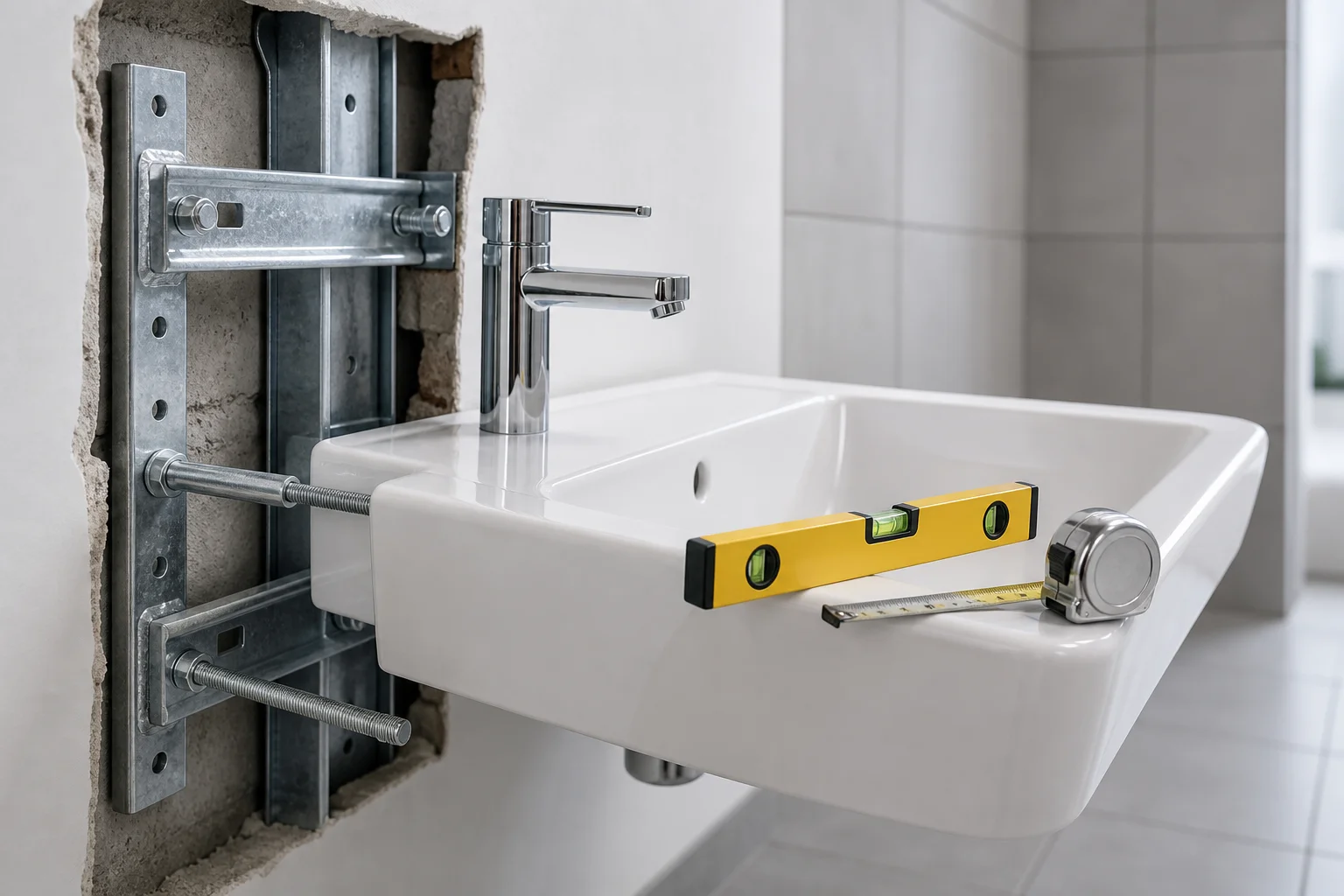
Figure 1: The interface between basin and carrier - fixing centres, waste position and load rating decide whether a wall-hung basin can be installed at all.
1. The Carrier, Not the Basin, Sets the Interface
Buyers often select a basin and treat the carrier as an afterthought. The correct sequence is the reverse. The basin defines the visible design, but the carrier defines where the fixing points sit, where the waste must exit, how far the basin projects from the wall, and how the load reaches the structure. Because the carrier is buried behind the finish, a mismatch cannot be corrected after the wall is closed - the only remedies are to re-open the wall or to accept a basin that will never sit level or seal correctly.
For a distributor, that means a wall-hung basin is not a single SKU but a matched set: basin, carrier or bracket, fixing kit, and waste. Selling the basin without verifying the carrier is how a container of good ceramic turns into a field complaint. The load-bearing behaviour of the ceramic body at the fixing zone is the other half of the same system, and it is covered in the commercial basin wall thickness and load-bearing guide.
2. Two Mounting Systems and Where Each Belongs
Wall-hung basins are supported in one of two ways, and the choice drives every downstream dimension.
| Feature | Concealed carrier (in-wall frame) | Surface bracket (exposed or semi-exposed) |
|---|---|---|
| Location | Bolted to the structure inside the wall or a duct | Fixed to the finished wall surface |
| Load path | Directly into the structural frame | Through the wall finish and its substrate |
| Typical use | Stud walls, drywall, prefabricated bathrooms | Solid masonry or concrete walls |
| Adjustability | Horizontal and vertical adjustment built in | Limited; set by the wall position |
| Waste route | Frame is built around the waste position | Waste passes beside the bracket |
| Best for | Commercial projects, new build, renovation | Retrofit on solid walls, light duty |
The concealed carrier is the standard for commercial work because it transfers load into the structure and lets the installer level the basin after the wall is closed. The surface bracket is the pragmatic choice where the wall is genuinely solid and opening it is not an option - but its load capacity depends entirely on the wall it is fixed to and cannot exceed it.
3. The Five Interfaces That Must Match
Compatibility is not a feeling; it is a checklist of five interfaces. If any one fails, the basin and carrier are incompatible regardless of brand.
- Fixing centres. The horizontal spacing between the basin's fixing holes must equal the carrier's stud or rod centres. Common basin centres are 180 mm, 200 mm, 230 mm, and 280 mm, and a difference of even a few millimetres prevents the rods from entering the holes.
- Fixing thread and diameter. The carrier rods and the basin's fixing inserts must share a thread and diameter, typically M10 or M12, with a length that clears the ceramic wall thickness.
- Waste outlet position. The centre of the basin's drain must fall clear of the carrier frame, and the outlet-to-back-of-basin offset must place the trap where it can be connected. A basin outlet that lands behind the frame cannot be plumbed.
- Basin projection and depth. A deep basin shifts its centre of gravity further forward and increases the bending load on the carrier; the carrier must be rated for that projection.
- Mounting height and waste height. The rim height the project requires must leave room for the waste and trap to run below the basin without cutting into the carrier or the structure.
4. Dimensional Data to Collect Before Ordering
The fastest way to a compatibility failure is to order from a catalogue picture. Collect the data below for both the basin and the carrier, and confirm they agree before the purchase order is raised.
| Parameter | Typical range / value | Why it decides compatibility |
|---|---|---|
| Fixing hole centres | 180 / 200 / 230 / 280 mm | Must equal the carrier rod centres |
| Fixing thread | M10 or M12 | Rod must thread into the basin inserts |
| Waste outlet diameter | 32 mm (1¼") or 40 mm (1½") | Must match the trap and carrier clearance |
| Outlet offset from back | Approx. 45 – 65 mm | Places the trap clear of the frame |
| Basin projection from wall | Approx. 400 – 560 mm | Sets the load and trap space required |
| Basin width | 450 – 650 mm (typical) | Must clear the carrier frame width |
| Rim height above floor | 850 – 900 mm (864 mm max where accessible rules apply) | Sets waste and trap height |
| Carrier load rating | At least the product standard's load test with margin | Must exceed the design load case |
5. Load Cases and Ratings
A wall-hung basin must be designed for more than its own weight. The load cases that matter in a commercial washroom, in increasing severity, are: the dead load of the ceramic, water, and fittings; the live load of a person leaning on the front rim; an accidental load from a person pulling on the basin while standing; and the extreme case of a person standing or sitting on the rim. The front rim is the worst position because it is the longest lever arm from the wall, so a load applied there produces the greatest bending moment at the fixing points.
Product standards for wall-hung basins include a static load test applied at the front of the basin, and the carrier and anchor design must exceed that test load with a safety margin. Ask the carrier supplier for a stated load rating and the test basis behind it, and confirm the rating is for the basin projection you are installing - a rating tested at a shallow projection is not valid for a deep one.
6. Wall Construction and Anchoring
The carrier can only be as strong as the structure it is fixed to. Match the anchor to the wall, because an anchor chosen for the wrong substrate is the single most common cause of a wall-hung basin pulling away.
| Wall type | Recommended fixing approach | Watch point |
|---|---|---|
| Timber stud | Coach screws into a doubled or nogged stud | Blocking must be designed in, not added later |
| Light-gauge steel stud | Heavy-duty toggle or a floor-and-wall carrier frame | Stud alone is not structural; use a full frame |
| Concrete / solid masonry | Expansion anchors or chemical anchors | Hold must ignore the weak surface render |
| Drywall over a duct | Concealed full-height carrier | Never fix a bracket to the plasterboard face |
| Prefabricated panel | Carrier bolted to the panel's structural frame | Confirm the panel's rated load |
Two rules protect the install. First, never transfer load through the wall finish; the load path must reach the structure. Second, verify the substrate before setting anchors - a fix that is sound in concrete fails in aerated block.
7. Adapters and Offsets: What Can and Cannot Be Reconciled
When a basin and carrier do not match, the instinct is to look for an adapter. Some mismatches can be corrected and others cannot. A small difference in fixing centres can sometimes be absorbed by a carrier with slotted adjustment; a vertical mismatch can be corrected by the carrier's height adjustment; and a waste that sits slightly off-centre can sometimes be routed with an offset trap. What cannot be fixed by an adapter is a waste outlet that lands behind the carrier frame, a thread mismatch between rod and insert, or a basin whose projection exceeds the carrier's rating. When the mismatch falls into that second group, the only correct answer is a different carrier or a different basin.
8. Installation Sequence and Fixing Torque
A correct install follows a fixed sequence, and skipping a step is how a level basin becomes a cracked one.
- Set out the height. Mark the finished rim height and the waste centre on the wall before anything is fixed.
- Fix the carrier to the structure. Anchor into the structural element, level and plumb, and check that the waste opening aligns with the frame.
- Set the rod or stud centres to the basin's fixing holes and lock the adjustment.
- Dry-fit the basin without sealing, confirm the holes drop onto the rods and the waste lands clear, then remove it.
- Seal and seat the basin. Apply the sealant, position the basin, and fit the washers and nuts.
- Torque the fixings evenly, working from one side to the other so the ceramic is not bent into the wall. Typical guidance for an M10 fixing is in the region of 25 – 35 N·m and for M12 in the region of 45 – 55 N·m; confirm the exact figure with the basin supplier, because over-torque cracks the ceramic and under-torque leaves the joint loose.
- Connect the waste and trap, check the fall, and fill the trap.
9. On-Site Acceptance Checks
Before the washroom opens, run four checks and record them.
- Level and plumb. The basin rim is level and the front face is plumb; a tilt shows in the water surface and in the door swing.
- Load test. Apply a controlled horizontal and downward load to the front rim, hold, and watch for movement, cracking, or a change at the wall line.
- Seal check. Fill the basin to the overflow and leave it; look for weeping at the wall joint and at the waste.
- Waste alignment. Confirm the trap connects with the correct fall and that no part of the waste bears against the carrier frame.
Photograph the checks and file them with the handover documents. The waste and overflow behaviour that these checks confirm is specified in the commercial basin drain and overflow specification guide.
10. Writing Carrier Compatibility Into the Purchase Order
A wall-hung basin order should define the matched set, not just the basin. Use the clause below.
| Specification item | Working requirement |
|---|---|
| Supplied scope | Basin plus matched carrier/bracket, fixing kit and waste |
| Fixing centres | Confirm basin centres equal carrier rod centres, state the value |
| Fixing thread | M10 or M12, with rod length clearing the ceramic wall |
| Waste | Outlet diameter and offset clear of the carrier frame |
| Load rating | Carrier rated above the product standard's load test with margin |
| Anchor type | Match the project wall construction, stated per wall type |
| Adjustability | Carrier allows levelling after the wall is closed |
| Documents | Carrier load rating, fixing instruction, and torque figure |
11. Common Failure Modes to Guard Against
Five failures recur across projects. The catalogue mismatch - basin bought from one supplier and carrier from another, with hole centres that almost agree. The wrong anchor for the wall - a bracket fixed to plasterboard or aerated block that cannot carry the load. The waste behind the frame - a deep basin whose outlet lands where the carrier cannot be routed around. The over-torqued fixing - a nut tightened until the ceramic cracks at the hole. And the unrated carrier - a generic bracket with no stated load capacity installed under a commercial basin. Every one is prevented by the same discipline: match the set before ordering, anchor to the structure, and verify the install on site.
12. Related Reading
- Commercial Basin Wall Thickness and Load-Bearing Installation - the ceramic side of the load path
- Wall-Hung Toilet Carrier Compatibility Checks - the same checks applied to wall-hung WCs
- Commercial Basin Drain and Overflow Specification - waste, overflow and connection detail
Frequently Asked Questions
How do I know a carrier is compatible with my wall-hung basin?
Check five interfaces: fixing hole centres, fixing thread and diameter, waste outlet position, basin projection and depth, and mounting height. The carrier's rod centres must equal the basin's hole centres, the outlet must land clear of the carrier frame, and the carrier must be rated for the basin's projection. If all five agree, the set is compatible.
What fixing centres do wall-hung basins use?
Common fixing hole centres are 180 mm, 200 mm, 230 mm, and 280 mm, but they are not standardised across models. Always take the centres from the exact basin on the order and match them to the carrier's adjustable range before purchase, because a few millimetres of difference will stop the fixing rods from entering the holes.
Can I use a concealed carrier on a stud wall?
Yes - a concealed carrier is the recommended choice for stud, drywall, and prefabricated-panel walls, provided it is bolted to the structural frame and not to the wall finish. On a light-gauge steel stud wall the stud alone is not structural, so use a full floor-and-wall carrier frame rather than a surface bracket.
What torque should I use to fix a wall-hung basin?
As a guide, an M10 fixing is typically torqued in the region of 25 – 35 N·m and an M12 in the region of 45 – 55 N·m, applied evenly from side to side. Confirm the exact figure with the basin supplier, because over-torque cracks the ceramic at the fixing hole and under-torque leaves the joint loose.
What can't an adapter fix between a basin and a carrier?
Adapters and slotted adjustment can absorb small differences in fixing centres and vertical position, but they cannot correct a waste outlet that lands behind the carrier frame, a thread mismatch between the rod and the basin insert, or a basin whose projection exceeds the carrier's load rating. Those three cases require a different carrier or a different basin.
🔧 Get Wall-Hung Basin Carrier Support
Sourcing wall-hung basins for hotels, offices, or public projects? Contact Yingjie Bath for carrier load data, fixing-centre dimension tables, and installation torque guidance with your team.
👉 Request Wall-Hung Basin Carrier Support