A vanity cabinet absorbing moisture at the base is the most common warranty claim in multi-unit projects. Prevention requires three layers: sealing raw edges before installation, creating a continuous silicone water barrier at the basin-to-counter junction, and controlling ambient humidity through mechanical ventilation.

1. Sealing Raw Edges Before Installation
Bottom Edge
2 coats D3/D4 PVA + 3–4 mm silicone bead. Use leveling feet, not shims - break the capillary path by lifting 10–15 mm.
Back Panel
Spray interior with PVA before assembly. Silicone around all plumbing penetrations - inside and outside.
Sink Cutouts
2 coats PVA on raw cut edge before dropping sink. 24-hour cure before water exposure.
2. Silicone Caulking: The Water Barrier
| Joint | Bead Size | Profile | Cure Time |
|---|---|---|---|
| Undermount/drop-in (under rim) | 6 mm | Concave | 24 hr |
| Undermount/drop-in (visible joint) | 4 mm | Concave | 24 hr |
| Vessel basin (base perimeter) | 6 mm | Downward-slope | 24 hr |
| Backsplash-to-wall | 6 mm | Downward-slope | 24 hr |
Critical: Use 100% neutral-cure silicone only.
Acetoxy-cure silicone (vinegar smell) releases acetic acid that corrodes metal hardware inside the cabinet. The corrosion may not be visible until hinges fail 2–3 years after installation.
3. Ventilation: CFM Calculation
| Bathroom Size | Volume (8 ft ceiling) | Required CFM (8 ACH) | Recommended Fan |
|---|---|---|---|
| Small (5 sqm) | 50 cu ft | 7 CFM | 50 CFM min |
| Standard (8 sqm) | 80 cu ft | 11 CFM | 50 CFM min |
| Large (12 sqm) | 120 cu ft | 16 CFM | 80 CFM |
| Hotel (5 sqm) | 50 cu ft | 50 CFM | 80 CFM continuous |
The 30-Minute Rule:
Run extraction fan 30 minutes after the last shower - not just during. The highest humidity spike occurs 5–10 minutes after water stops. Timer switches prevent guests from switching off early.
4. Installation Checklist
| Stage | Action | Failure Mode if Skipped |
|---|---|---|
| Pre-install | Seal raw edges PVA ×2 | Base swelling within 12 months |
| Pre-install | Spray back panel PVA sealer | Back panel delamination |
| During | 6 mm silicone basin rim ×2 | Water seepage down cabinet face |
| During | Leveling feet, not shims | Capillary water path |
| Post | 24 hr silicone cure | Partial bond failure |
| Ongoing | 50+ CFM, 30-min timer | Cabinet RH above 60% |
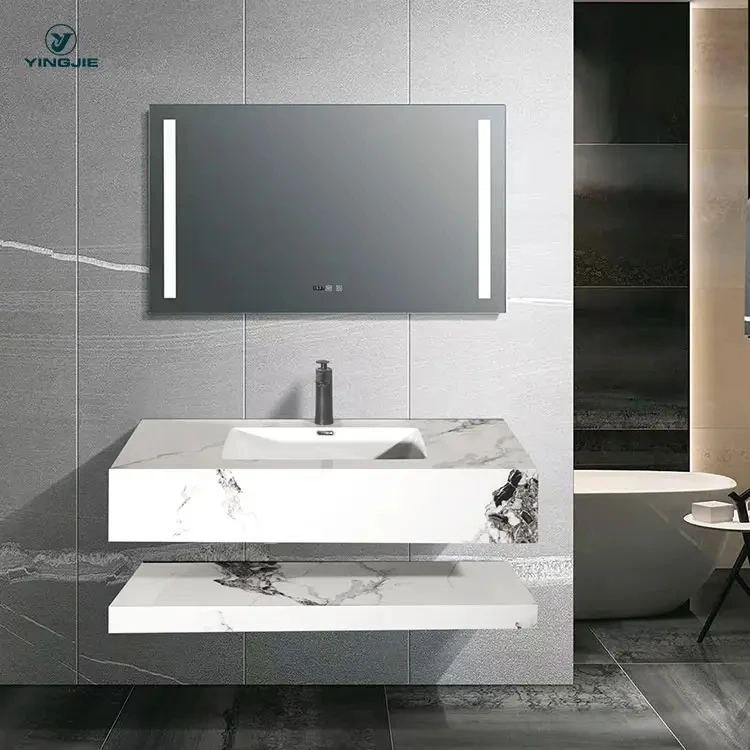
📌 Yingjie Sanitary Ware's vanity collection - PVC-wrapped MDF with factory-sealed edges. See: solid wood vs MDF vs particleboard comparison.
FAQ
Seal MDF edges against water?
To effectively seal MDF edges against water damage, apply two heavy coats of D3 or D4 class waterproof PVA sealer to all raw cut surfaces, ensuring a 2-hour drying window between applications. Once the PVA has cured for 24 hours, apply a 3–4 mm bead of 100% neutral-cure silicone along the bottom edges that sit near the floor. Tool the silicone bead flat to create a continuous 5–8 mm wide seal strip that acts as a physical barrier against mopping water and spills. This two-layer strategy uses the PVA to penetrate and stabilize the wood fibers while the silicone provides a flexible, waterproof shield for the surface. Skipping either step leaves the porous MDF core vulnerable to capillary action, which can cause swelling and delamination within months of installation.
Best silicone for vanity caulking?
The only recommended sealant for bathroom vanity installation is 100% neutral-cure silicone, which provides superior adhesion without chemical risks. You must avoid acetoxy-cure silicones, often identified by their strong vinegar scent, because they release acetic acid during the curing process that can corrode metal hinges and drawer slides. Neutral-cure formulas are chemically stable and safely bond to various materials including laminate, sintered stone, ceramic basins, and painted wood. They also offer better long-term flexibility and UV resistance, preventing the seal from cracking as the vanity expands and contracts with temperature changes. Using a high-quality anti-fungal neutral silicone will also prevent black mold growth along the basin rim in high-humidity environments.
Bathroom ventilation CFM needed?
Protecting a bathroom vanity requires an extraction fan capable of at least 50 CFM for standard bathrooms, or 80 CFM for larger or commercial spaces, to achieve a minimum of 8 air changes per hour. The system should be equipped with a 30-minute delay timer to ensure that humid air is fully removed long after the shower has been turned off and the guest has left the room. Proper ventilation prevents the ambient relative humidity from exceeding 60%, which is the threshold where moisture begins to condense inside cabinet cavities and behind back panels. If humidity levels remain high, the substrate will slowly absorb moisture from the air, leading to warped doors and structural weakening over time. We recommend installing a digital hygrometer inside the cabinet during the first month of occupancy to verify that the ventilation system is performing at its required extraction rate.
Vanity failure point #1?
The primary failure point for bathroom vanities is the bottom edge of the side panels where they meet the floor, as mopping water and spills are easily absorbed through capillary action into the unsealed substrate. A secondary high-risk zone is the interior of the back panel surrounding plumbing cutouts, where condensation from cold water pipes can drip and pool on raw edges. Water that seeps behind the backsplash due to a failed silicone joint also frequently causes the top edges of the cabinet carcass to swell and rot from the rear. Front drawer faces and door edges are also vulnerable if water is allowed to run down from the countertop and sit in the gaps between panels. Identifying these zones during installation allows for targeted sealing with PVA and silicone, significantly extending the service life of the furniture.
Silicone cure time before water?
Silicone sealants require a full 24 hours at room temperature to cure through their entire 3–6 mm depth and achieve maximum bond strength. While the surface may appear dry or 'skinned over' after just 2 hours, the internal material remains liquid and susceptible to structural failure if disturbed. Exposing the joint to water or steam before the 24-hour mark can create micro-channels within the bead that allow moisture to bypass the seal and reach the wood substrate. This premature exposure is a leading cause of 'invisible' leaks that result in vanity swelling weeks or months after the installation appears complete. For the best results, ensure the bathroom remains well-ventilated and completely dry during this critical curing period to allow the silicone to cross-link properly with the surface.
Get Vanity Installation Guide & Product Specs
Installing vanities for multi-unit projects? Contact Yingjie Sanitary Ware for waterproof installation checklists and factory-sealed vanity datasheets.
Request Installation Guide & Commercial Quote