
Buyer's Guides & Comparisons
The pre-shipment inspection (PSI) report is the single document that decides whether a container of ceramic sanitary ware is released or held - and yet many buyers file it without reading it, treating the "PASS" stamp on the cover as the whole story. The stamp is the least important part. What matters is whether the report shows a proper sample, drawn at random from packed cartons, checked against a defined AQL plan, with a defect tally that adds up and evidence photographs that prove the sample was real. A report that carries a pass stamp but no tally, no sample numbers, and no photographs is a report that proves nothing.
This article is the buyer's review checklist for a ceramic sanitary ware PSI report. It covers what a PSI is and when it happens, the header data that makes a report traceable, the inspection scope a sanitary ware report must document, how to read the defect tally and the AQL decision, the evidence pack behind the verdict, how to challenge a weak report, and the red flags that should stop a shipment before the container door closes. It is written to be used alongside the sanitary ware sample approval and pre-shipment inspection workflow and the complete ceramic sanitary ware testing protocol, which explain the tests the report should be built on.
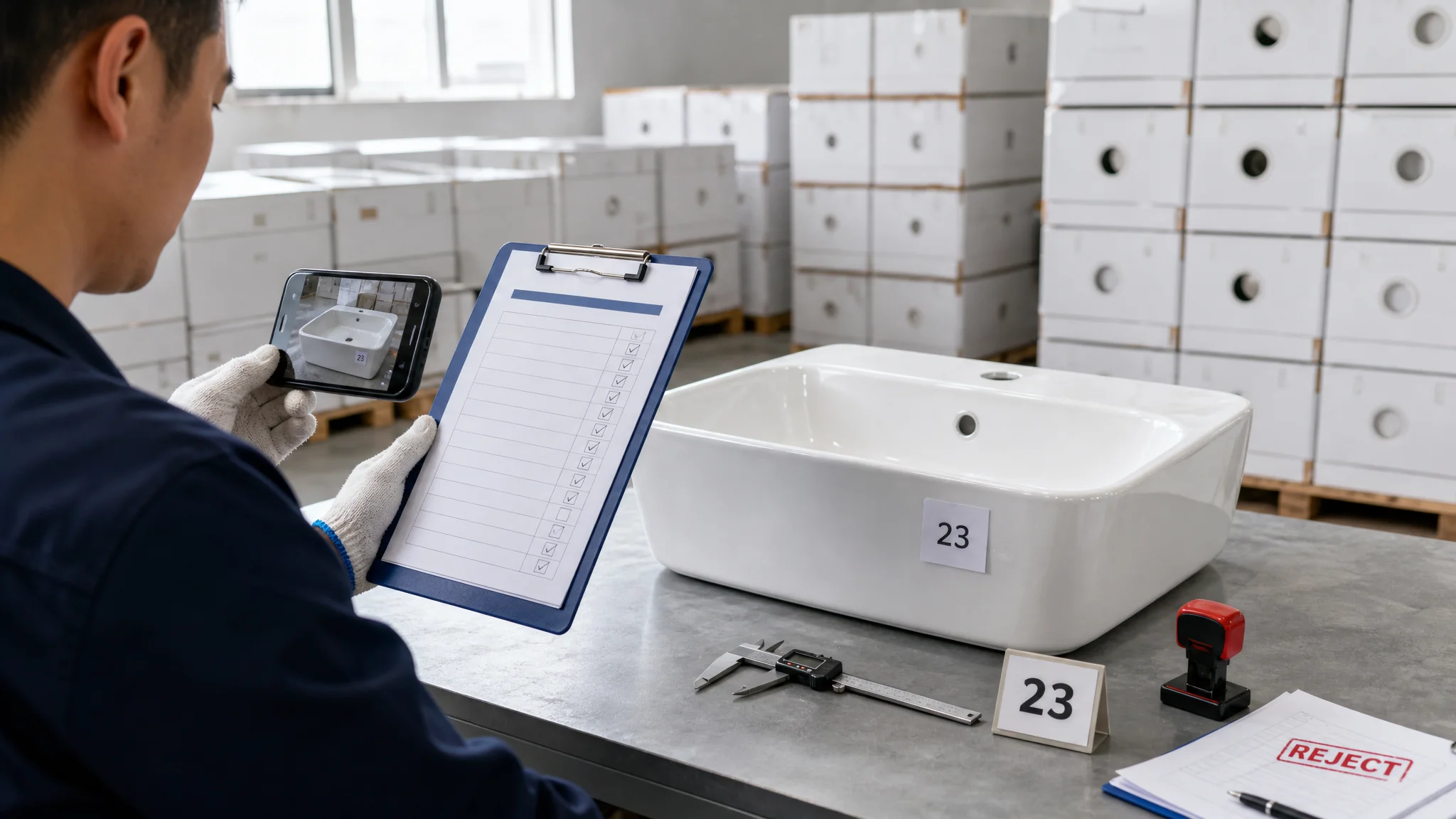
Figure 1: The PSI bench - the report's value comes from the sample numbers, tally and photos captured here, not from the pass stamp on the cover.
1. Why the PSI Report Is the Buyer's Most Important Document
A pre-shipment inspection is the last controlled moment in the order. After the container is sealed, the only remedies left are claims - slow, evidence-heavy, and rarely full-value. Before the seal, a defect found at the inspection bench is a correction the factory makes at its own cost. The PSI report is the record of that moment, and it carries a legal and commercial function: it is the shared, signed statement of what the goods were when they left the factory.
That function explains why the report's quality matters as much as its verdict. A report that records a random sample of packed cartons, the measured defect counts per class, and the corresponding evidence is something both sides can rely on later. A report that records only a verdict is a memory with a logo on it - and memories do not survive a warranty claim that arrives eight weeks after the vessel sails. The buyer's job is not to receive a report but to review one, and the review is mechanical once you know which fields must be present.
2. What Triggers a PSI and When It Happens
A PSI is a final inspection performed when production is complete and the goods are packed and staged, but before they are loaded into the container. Timing is critical: an inspection run while cartons are still being packed samples a lot that does not yet exist, and an inspection run after loading has closed the only window in which a defective lot can still be reworked. The standard sequence is production complete, goods packed, buyer or third-party inspector attends, sample drawn from the packed cartons, verdict issued, and only then loading.
The inspection rests on a sampling plan, and for ceramic sanitary ware the plan should be the one written into the purchase order: ISO 2859-1 (GB/T 2828.1), General Inspection Level II, single sampling, normal inspection, critical AQL 0, major AQL 2.5, minor AQL 4.0. The lot is defined per model - one model's batch in one shipment - and the sample size follows from the lot size. A PSI report that does not name its standard, level, and AQL values cannot be compared to the plan, and a report that does not name the lot is not a sampling report at all.
| PSI parameter | Value the report must show | Why it matters |
|---|---|---|
| Standard and level | ISO 2859-1, Level II, single sampling | Makes the sampling result reproducible |
| AQL per class | Critical 0 / Major 2.5 / Minor 4.0 | Defines the accept/reject decision |
| Lot definition | One model/SKU batch in the shipment | Prevents mixed-model lots from hiding defects |
| Sample size | Code letter and sample count | Proves the draw matched the plan |
| Timing | After packing, before loading | Proves the sample represents the shipped goods |
3. The Report Header: Identification Data
The header is what makes a report traceable, and a missing field is a broken link in the chain between a defect found at a customer's warehouse and the batch that produced it. Every PSI report should carry a complete header before any result is read. If the header is incomplete, stop: the results below it cannot be tied to your order with certainty.
| Header field | What it must contain |
|---|---|
| Buyer / importer | The legal buyer on the purchase order |
| Factory / supplier | The contracted manufacturer, and the production site |
| Purchase order | PO number, and the model/SKU list under inspection |
| Lot size | Quantity of each model in the inspected lot |
| Sample size | Code letter and number of pieces actually inspected |
| AQL plan | Standard, level, and per-class AQL limits |
| Inspection date | Date the inspection was performed |
| Inspector / agency | Name and organization of the inspector |
4. The Inspection Scope: What a Sanitary Ware PSI Must Cover
Ceramic sanitary ware cannot be inspected with a single glance. A meaningful PSI covers the fixture on three axes - material, dimensions, and performance - plus the packaging that will protect it. The report should list every check performed and the instrument used, because a check that is not listed was not done. For a toilet, the scope includes flush performance and water consumption; for a basin, drain and overflow geometry and finish; for every fixture, glaze and body condition, dimensional tolerance, and carton integrity.
| Inspection axis | Checks to document | Typical instrument or limit |
|---|---|---|
| Material | Water absorption on fired samples | ≤ 0.5% (vitreous china, boiling-water method) |
| Dimensions | External dimensions and critical fittings | ±3 mm external; ±2 mm critical fittings |
| Glaze / finish | Crazing, pinholes, specks, color and gloss | D65 light; ΔE ≤ 2.0; gloss ±5 GU |
| Trap / function | Trap pass, flush evacuation and refill | 51 mm ball pass; complete evacuation |
| Packaging | Carton integrity, marking, pack quantity | Per the carton and marking specification |
5. Reading the Defect Tally and the AQL Decision
This is the section where a PSI report is either enforceable or theatrical. The report must show, per defect class, the number of defects found in the sample and the accept/reject decision that follows from the AQL plan. Any single critical defect rejects the lot at AQL 0. For major and minor defects, the accept number (Ac) and reject number (Re) come from the sampling table for the code letter; the report should show the count found against that limit. "Pass" is a conclusion; the tally is the evidence.
| Defect class | AQL | Decision shown in the report |
|---|---|---|
| Critical | 0 | Any one defect → reject the lot |
| Major | 2.5 | Count vs. Ac/Re for the sample size |
| Minor | 4.0 | Count vs. Ac/Re for the sample size |
| Overall | - | Per-class result plus overall verdict |
A report that shows an overall verdict but no per-class tally has skipped the arithmetic that makes the verdict defensible. Ask for the tally; if it cannot be produced, treat the pass as unverified.
6. The Evidence Pack Behind the Verdict
The tally is a number; the evidence is what proves the number came from real goods. For every PSI, require a defined evidence pack: photographs that show the sample in context, defect photographs that show the defect with its sample-number tag and a scale reference in the same frame, the list of cartons sampled with their batch identity, and the raw check notes including functional test data. Defect photos without a sample number are decoration - they show that something was wrong and give no way to prove which piece it was.
| Evidence item | What it must show | Retention |
|---|---|---|
| Sample photographs | Sampled pieces with sample-number tags | With the report |
| Defect photographs | Defect, sample number, and scale in one frame | Until claim window closes |
| Carton / batch list | Which cartons and batches were sampled | With the report |
| Functional test data | Raw readings for flush, refill, seal | With the report |
| Signed report | Both parties' signatures at the bench | Minimum 12 months |
| Loading photos | Container and door-face condition after approval | Until claim window closes |
7. Reading the Verdict: Pass, Fail, or Pending
A PSI verdict is one of three states, and the middle one is the most dangerous. Pass means the lot met the plan and may proceed to loading. Fail means it did not, and the written consequence - 100% factory inspection, removal of defective pieces, and re-presentation for a fresh sample at the factory's cost - should be stated in the purchase order and invoked. Pending is the outcome that quietly consumes weeks: the lot is neither cleared nor rejected, the vessel cutoff approaches, and pressure builds to release goods "with a note." A buyer should treat a pending verdict as a fail until it is resolved, because releasing a pending lot converts the inspection into a formality.
8. Common PSI Report Failures and Red Flags
Most weak reports fail in the same handful of ways. Learn to scan for them:
| Red flag | What it suggests |
|---|---|
| No per-class tally, only a verdict | The AQL arithmetic was never run |
| No sample numbers on photos | Evidence cannot be tied to a piece |
| Lot defined as the whole container | Mixed models hidden in one sample |
| Sample drawn from a rework rack | The sample does not represent shipped goods |
| Tests named without standard or limits | Results cannot be compared to the plan |
| Missing header fields | The report cannot be tied to your PO |
| "Pass" issued before packing complete | The sample did not represent the shipped lot |
9. The Buyer's PSI Report Review Checklist
Before you accept a PSI report and release the container, confirm:
- The header is complete - buyer, factory, PO, model/SKU, lot size, sample size, AQL plan, date, inspector.
- The standard, inspection level, and AQL limits match the purchase order.
- The lot is defined per model, not as the whole mixed shipment.
- The sample was drawn from packed cartons, spread across the lot, with numbered pieces.
- The per-class defect tally is shown against the Ac/Re numbers, with the per-class decision.
- The inspection scope lists the material, dimensional, glaze, functional, and packaging checks performed.
- The evidence pack is present: sample and defect photos with tags and scale, carton/batch list, raw functional data.
- Both parties signed the report at the bench, and it will be retained for at least 12 months.
- Any rejected or pending lot has a written corrective-action plan before loading.
- Loading photos are captured after approval and kept until the claim window closes.
A buyer who runs these ten points turns the PSI from a document received into a document used - the last control point before the goods become unrecoverable. The factory-side discipline that produces a report worth reviewing is the same process described on the About Us page of Yingjie Bath.
10. Related Reading
- Sanitary Ware Sample Approval and Pre-Shipment Inspection - the approval-to-inspection workflow
- Quality Control for Ceramic Sanitary Ware: The Complete Testing Protocol - the tests behind the report
- Sanitary Ware AQL Sampling and Defect Classification - the sampling plan the report executes
Frequently Asked Questions
What is a pre-shipment inspection report for sanitary ware?
It is the signed record of a final inspection performed after production is complete and the goods are packed, but before they are loaded into the container. It documents the header data (buyer, factory, PO, model, lot size, sample size, AQL plan, date, inspector), the checks performed, the per-class defect tally against the AQL accept/reject numbers, the evidence photographs, and the verdict. It is the buyer's shared, traceable statement of what the goods were when they left the factory - and the last point at which a defect is a correction rather than a claim.
When should the PSI be performed?
After production is complete and the goods are packed and staged, but before loading. If the inspection runs while cartons are still being packed, the sample does not represent the finished lot; if it runs after loading, the window for rework has closed. For ceramic sanitary ware, the inspection should sample drawn-from-packed-carton pieces under a written AQL plan - ISO 2859-1, General Inspection Level II, critical 0, major 2.5, minor 4.0 - with the lot defined per model, not as the whole mixed container.
What must the defect tally show?
The tally must show, per defect class (critical, major, minor), the number of defects found in the sample and the accept/reject decision that follows from the AQL limits. Any single critical defect rejects the lot at AQL 0. Major and minor results are read against the accept (Ac) and reject (Re) numbers for the sample-size code letter. A report that shows only an overall verdict without a per-class tally has skipped the arithmetic that makes the verdict defensible; ask for the tally, and treat a pass without one as unverified.
What evidence should accompany the report?
Demand a defined evidence pack: sample photographs with sample-number tags, defect photographs that show the defect with its tag and a scale reference in the same frame, the list of cartons sampled with their batch identity, and the raw functional test data (flush, refill, seal). Both parties should sign at the bench, and the report should be retained for at least 12 months. Defect photos without sample numbers are decoration - they show something was wrong but give no way to prove which piece it was.
What should I do if the report fails or is pending?
Invoke the written consequence for a failed lot: 100% inspection by the factory, removal of defective pieces, and re-presentation for a fresh sample at the factory's cost. Treat a pending verdict as a fail until it is resolved - a lot that is neither cleared nor rejected tends to get released "with a note" under vessel-cutoff pressure, which converts the inspection into a formality. Document the corrective action and keep the loading photos after approval until the claim window closes.
🔎 Get Pre-Shipment Inspection Report Support
Reviewing a pre-shipment inspection (PSI) report for a ceramic sanitary ware order, or need a report template and review checklist? Contact Yingjie Bath for AQL sampling plans, inspection-report formats, evidence-photo specifications, and batch records.
👉 Request Pre-Shipment Inspection Report Support