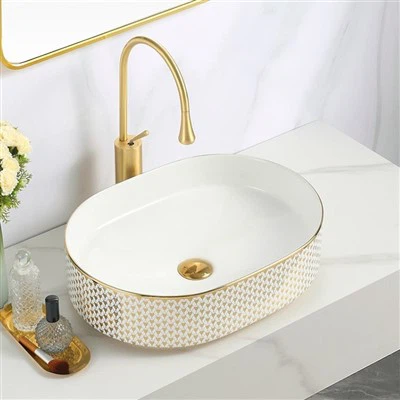
Water stains are the most visible daily nuisance in any bathroom - the white mineral marks left when hard water dries on a surface, and the spots that make a clean basin look unclean. A gold bathroom basin's resistance to water stains is a property of its surfaces: the glaze sheds the water, the finish's protective layer resists the mineral deposit, and the care habit removes the residue before it dries. The answer is positive for well-made surfaces - and the practical difference is the surface engineering plus the wiping habit.
Where water stains come from
Water stains are mineral deposits: hard water carries dissolved minerals, and when the water evaporates from a surface, the minerals remain as the white marks. The basin sees the conditions constantly - water splashed at the basin, dried by air and use - and the stain formation depends on two things: how the water behaves on the surface, and how long it is allowed to dry there. A surface that sheds water into droplets leaves less residue than a surface that holds a flat film, and a residue that is wiped before drying never becomes a stain.
The glaze and the finish behavior
The basin's layers determine the water behavior. The glaze provides the base: a smooth, well-sealed glaze holds water in droplets rather than absorbing it, which reduces the residue left behind. The gold finish adds the top layer: a protected metallic surface resists the mineral deposit and the spotting that a weaker surface would show. The engineering question is the protective layer - a well-protected finish sheds water and wipes clean, while a poorly protected one holds the deposit and dulls with the stains. The surface engineering is the first half of the water-stain answer.
The wiping habit completes it
The second half is the habit: water stains form when residue dries on the surface, and wiping the basin after use removes the residue before the drying happens. The daily wipe is the cheapest stain prevention available - a few seconds after each use keeps hard-water deposits from ever forming - and the periodic clean addresses the residue that accumulates despite the habit. The basin that is wiped is the basin that never needs stain removal; the stain removal itself - a suitable descaler for the mineral marks - is the backup for the missed wipes.
Verifying the stain behavior
The stain behavior is verified on the surface: request a sample, run the expected water conditions on it, and observe how the water sheds and how the residue wipes off. The sample is the fastest test of the surface's daily character - the same finish name can behave differently across production, and the physical test settles the question that the brochure cannot.
The water-stain answer
Gold bathroom basins resist water stains through the surface engineering - a smooth glaze and a protected finish that shed water and wipe clean - completed by the wiping habit that removes residue before it dries. Buyers should verify the surface behavior on a sample and match the care habit to the project's water conditions. YINGJIE's gold-finished basin range is produced with protected surfaces for daily water contact. Review the gold basin category page and request a sample to verify the stain behavior before ordering.